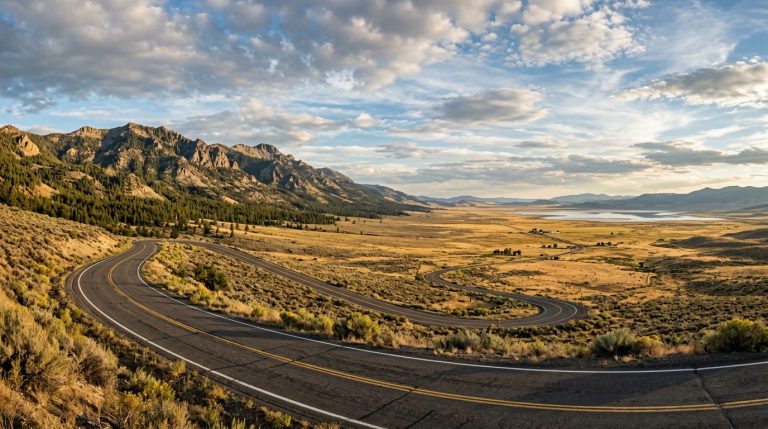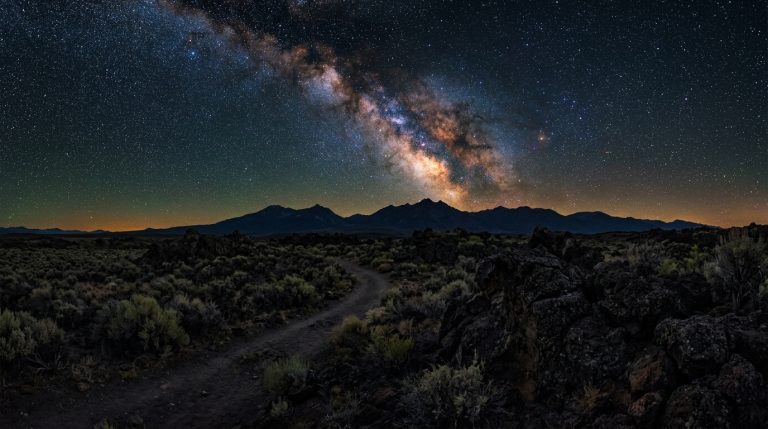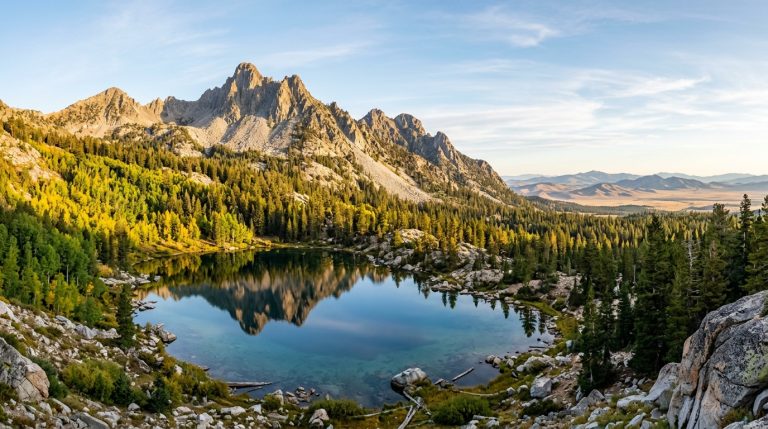
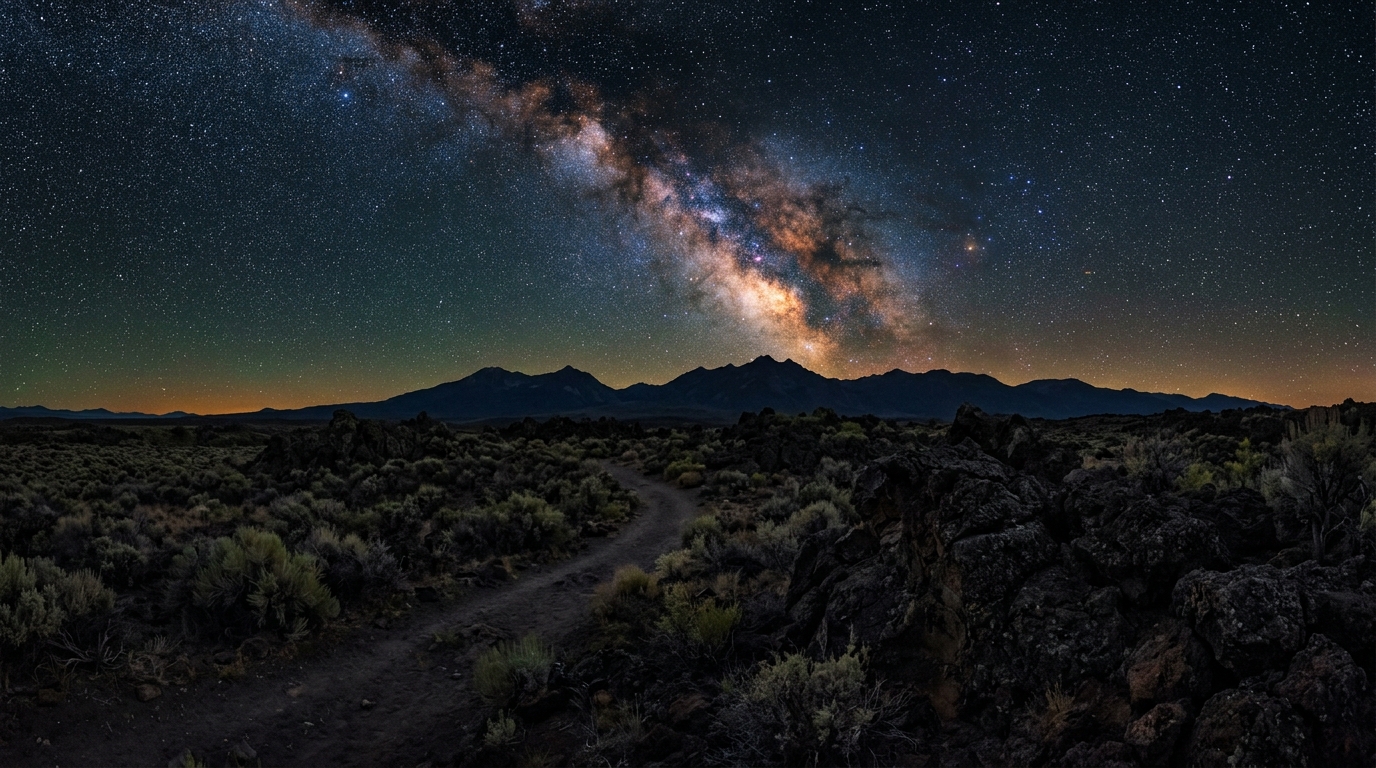
Modoc County is one of California’s strongest regions for travelers who want wide horizons, limited artificial light, and long nights under the Milky Way. The county’s sparse population, remote public lands, volcanic plateaus, mountain lakes, and high-desert valleys create excellent conditions for viewing stars, planets, satellites, and meteor showers when skies are clear.
Good stargazing here still requires planning. The darkest locations may be far from fuel, food, phone service, and maintained roads. Wildfire smoke can reduce visibility during summer, high-elevation temperatures can fall quickly after sunset, and some recreation areas close or become difficult to reach in winter. A successful night begins with choosing an established location and checking current access rather than driving toward the darkest-looking point on a map.
This guide focuses on practical viewing areas at Lava Beds National Monument and within the Sáttítla Highlands and Modoc National Forest. It also explains how to time a visit around the Moon, prepare for the 2026 Perseid meteor shower, use low-impact lighting, and photograph the sky responsibly. Pair it with the Modoc County trip-planning guide when building a longer regional itinerary.
Where to Stargaze in Modoc County
Lava Beds National Monument
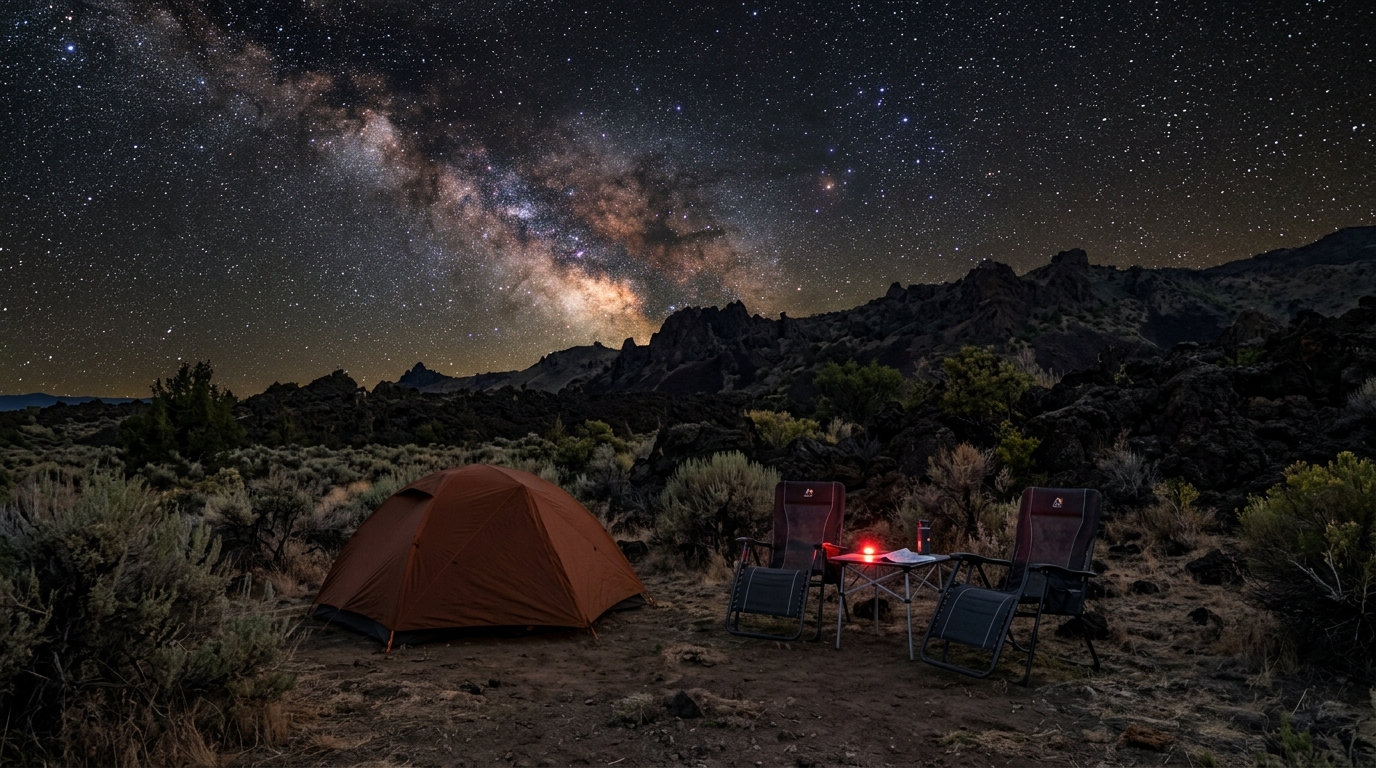
Lava Beds National Monument is one of the most dependable stargazing choices in the region because it combines a remote setting with an established campground, mapped roads, toilets, and clear visitor information. The National Park Service notes that the monument’s low surrounding population and relatively good air quality contribute to broad nighttime views, although smoke and regional air pollution can still affect visibility.
During daylight, visitors can explore volcanic terrain and permitted caves using the site’s Lava Beds cave guide. After sunset, the open high-desert landscape provides wide views with fewer trees and buildings blocking the horizon. Choose a legal parking or camping area before dark so you are not searching for a safe pullout with headlights after other visitors have begun observing.
The campground and roads are subject to current conditions. Some southern approaches are not maintained through winter, and the gravel connection toward Medicine Lake may remain inaccessible well into the season. Always review the official Lava Beds alerts and conditions page before departure, especially when planning around smoke, snow, fire restrictions, or a meteor shower.
Indian Well Campground and Night Programs
Indian Well Campground is the easiest base for visitors who want to remain inside the monument after dark. Sites are primitive and generally first come, first served, while current campground fees and loop availability should be confirmed before arrival. Quiet hours run from 10:00 p.m. to 6:00 a.m., and generators are not permitted during that period.
The National Park Service occasionally offers ranger-led night-sky programs with constellation interpretation and telescope viewing. Program dates are not guaranteed, so check the park calendar rather than building a trip around an older event listing. Even without a program, the campground provides a practical place to let your eyes adjust while staying close to your vehicle, shelter, and established facilities.
Keep white lights low and pointed toward the ground. A red-light headlamp is useful, but it should still be dimmed around neighboring campsites. Do not walk onto roads to improve a camera angle, and do not set tripods where they block paths, parking spaces, or campground access.
Sáttítla Highlands and Medicine Lake
Sáttítla Highlands National Monument offers a different experience: forested volcanic country, mountain lakes, lava flows, and a much larger network of seasonal roads. The Forest Service specifically identifies stargazing as one of the monument’s recreation opportunities. Review the official Sáttítla Highlands National Monument information before traveling.
Medicine Lake is the most understandable starting point because it has established recreation sites and can be combined with the site’s Sáttítla Highlands and Medicine Lake guide. At approximately 6,770 feet, the recreation area can become cold soon after sunset even when nearby valleys remain warm.
Snow limits access for part of the year, and forest roads may be rough, dusty, or unsuitable for low-clearance vehicles. Arrive in daylight, confirm the road with current Forest Service information, and do not rely entirely on mobile navigation.
Open lakeshore areas can provide broad reflections and attractive foregrounds for Milky Way photography. Forest clearings and established campgrounds are often safer than isolated roadside stops because drivers can park fully off the travel lane and identify hazards before darkness. Avoid walking onto lava flows, obsidian areas, shorelines, or unmarked routes at night simply to find a more dramatic composition.
Medicine Lake, Forest Campgrounds, and Safe Pullouts
Use a developed campground when staying for several hours or overnight. Verify whether the campground is open, whether potable water is available, and whether current fire restrictions affect cooking or heating equipment. Never assume that an existing fire ring means a wood fire is legal.
The Medicine Lake day-use area currently closes at 10:00 p.m. Travelers planning to remain later should use a legal campsite or another location where nighttime access is specifically allowed. Do not remain in a closed day-use site simply because the parking area is still accessible.
For a shorter viewing session, choose a mapped recreation site or legal pullout with enough room for the entire vehicle. Park facing the direction you intend to leave, keep keys and emergency equipment accessible, and avoid blocking gates or forest roads. The goal is a dark view without creating a roadside hazard or disturbing campers and wildlife.
The South Warner Wilderness also has exceptionally remote skies, but hiking deep into the backcountry after dark is not a sensible first stargazing plan. Travelers using the South Warner Wilderness guide should observe from an established campground or a campsite already reached and prepared in daylight.
How to Plan a Safe and Successful Stargazing Night
Choose the Moon, Weather, Equipment, and Arrival Time
A dark site cannot overcome clouds, dense smoke, or a bright Moon. For Milky Way viewing and faint meteors, choose dates near the new Moon and check the Moon’s rise and set times. A full Moon can still be worthwhile for moonlit landscapes and beginner telescope viewing, but it will wash out many faint stars.
Check several forecasts before leaving: cloud cover, temperature, wind, wildfire smoke, and road conditions. Bring warm layers, gloves, water, food, a chair or sleeping pad, a red-light headlamp, offline maps, and a charged power bank. Binoculars are often more useful for beginners than a telescope because they are easy to carry and can reveal star clusters, the Moon, and bright deep-sky objects.
Arrive at least 30 minutes before the end of twilight. This gives you time to inspect the ground, position the vehicle, assemble equipment, and identify the route back without flooding the area with headlights. Human eyes need time to adapt to darkness, and one bright phone screen can undo much of that adjustment.
Best 2026 Meteor-Shower Dates
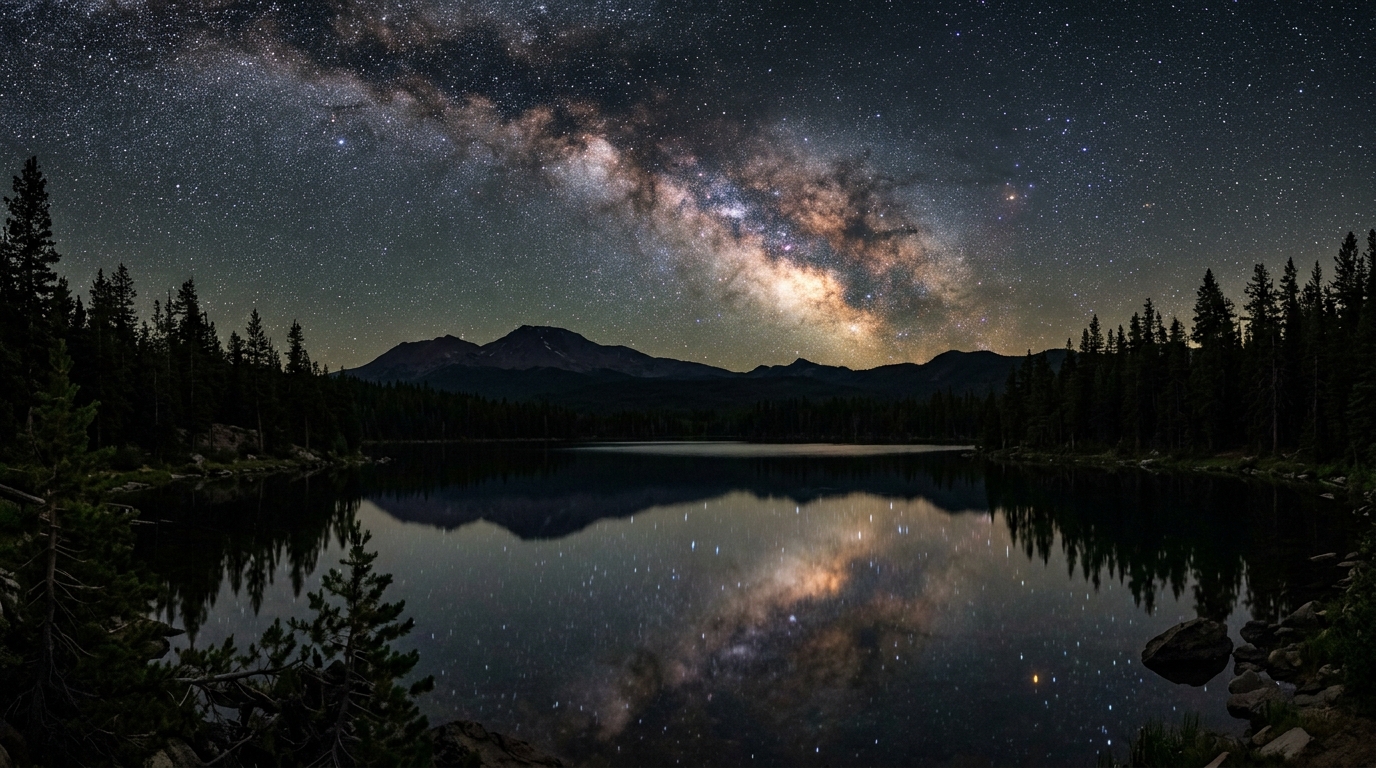
The strongest timely opportunity is the Perseid meteor shower on the night of August 12–13, 2026. According to NASA’s 2026 skywatching calendar, the peak coincides with a new Moon, creating potentially excellent viewing conditions when the weather is clear.
Meteors can appear anywhere in the sky, so a reclining chair and an open view are more useful than a telescope. Allow at least 20 to 30 minutes for your eyes to adjust and remain outside for an extended period instead of expecting continuous activity.
The Southern Delta Aquariids and alpha Capricornids are active around July 30–31, while the Orionids peak October 21–22. The Geminids arrive December 13–14, but winter road and weather conditions make remote Modoc locations harder to use safely. Treat event dates as planning windows rather than guarantees, and check an updated NASA forecast before the trip.
Night Safety, Photography, and Dark-Sky Etiquette
Tell someone where you are going and when you expect to return. Carry more fuel than the route appears to require, stay on open roads, and leave if smoke, wind, cold, or vehicle conditions become unsafe. Wildlife is active at night, so drive slowly and avoid approaching animals with lights.
For photography, use a tripod, manual focus, a wide aperture, and test exposures before the sky becomes fully dark. Shield the camera screen, avoid repeated bright flashes, and never use light painting around wildlife, cultural sites, caves, or other visitors without permission. Stay on durable surfaces and pack out every item.
Do not advertise Modoc County as an officially certified dark-sky destination unless a recognized certification is confirmed. Its appeal is straightforward enough: the Forest Service describes the Modoc National Forest as a dark-sky sanctuary, the National Park Service recognizes Lava Beds as a place that draws stargazers, and the region offers large public landscapes with very little urban glow.
The best stargazing night is not necessarily the one with the most equipment or the longest drive. Choose an established site, arrive before dark, protect your night vision, watch the weather, and leave enough flexibility to change plans. A quiet hour under the stars at Lava Beds or Medicine Lake can become one of the clearest expressions of what makes Modoc County feel genuinely remote.